

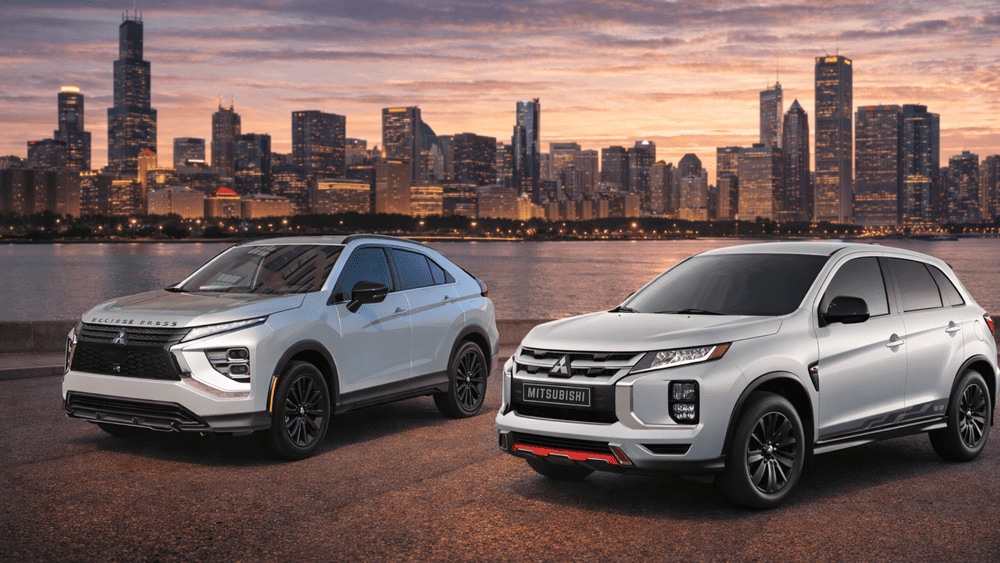
The daily commute has a way of revealing the true character of an SUV. Over time, familiar routes highlight how an engine responds in traffic, how comfortable the seats remain during longer drives, and how easily the vehicle fits into tight parking spaces. For drivers considering Mitsubishi’s compact SUV lineup, the 2025 Mitsubishi Eclipse Cross and the 2025 Mitsubishi Outlander Sport often rise to the top of the conversation because they address similar needs while delivering distinctly different commuting experiences. Choosing between them requires a closer look at how each model approaches power delivery, interior practicality, and driver-focused technology, all through the lens of everyday use.
Power Delivery and Driving Feel in Daily Traffic
The 2025 Mitsubishi Eclipse Cross is engineered to feel alert and responsive during routine driving. Its 1.5-liter turbocharged four-cylinder engine produces 152 horsepower and 184 lb-ft of torque, with torque arriving early in the rev range. In practical commuting terms, this means the vehicle reacts promptly when pulling away from traffic lights, merging into flowing lanes, or navigating rolling congestion on busy arterial roads. The continuously variable transmission works to keep the engine operating smoothly, avoiding abrupt changes in engine speed and maintaining a consistent feel during stop-and-go driving. This tuning makes the 2025 Mitsubishi Eclipse Cross particularly well suited for commuters who deal with frequent speed changes and short bursts of acceleration throughout the day.
All-wheel drive is a defining element of the 2025 Mitsubishi Eclipse Cross lineup, and it plays an important role in daily confidence. Commuters who face changing weather conditions benefit from consistent traction during rain, snow, or slick early morning roads. The system operates seamlessly in the background, allowing the driver to focus on traffic rather than road conditions. Over time, this predictability becomes a meaningful part of the driving experience, especially for those who commute year-round and value stability as much as performance.
The 2025 Mitsubishi Outlander Sport takes a more traditional approach to powertrain design, which appeals to drivers who prefer a straightforward and predictable response. It is available with a 2.0-liter four-cylinder engine producing 148 horsepower and 145 lb-ft of torque, as well as a 2.4-liter four-cylinder that increases output to 168 horsepower and 167 lb-ft of torque. These naturally aspirated engines deliver power in a linear manner, making throttle inputs easy to control in steady traffic. Acceleration builds progressively, which can feel reassuring during longer stretches of consistent speed or when navigating dense urban areas where smoothness is valued over quick bursts of power.
Mitsubishi’s available All-Wheel Control system on the 2025 Mitsubishi Outlander Sport further supports daily driving by managing traction across different surfaces. This system is particularly useful for commuters who encounter uneven pavement, seasonal weather changes, or hilly terrain. The result is a driving experience that feels composed and balanced, with power delivery that remains easy to anticipate throughout the commute.
Size, Comfort, and Cargo for Everyday Use
Vehicle size and interior layout play a significant role in how an SUV fits into a daily routine. The compact exterior dimensions of the 2025 Mitsubishi Outlander Sport make it an appealing choice for drivers who frequently navigate narrow streets and crowded parking areas. Its shorter length and tight turning radius allow for confident maneuvering in places where space is limited, such as older city neighborhoods or multi-level parking garages. This ease of movement reduces daily stress and makes routine errands more manageable.
Inside, the 2025 Mitsubishi Outlander Sport emphasizes straightforward ergonomics. Controls are placed logically, and the seating position feels familiar to drivers who may be transitioning from a smaller vehicle. Front seats provide support for extended periods behind the wheel, which is important for commuters whose drives extend beyond a quick ten-minute trip. While the cabin remains compact, it is designed to make efficient use of space without feeling cramped.
The 2025 Mitsubishi Eclipse Cross offers a slightly larger footprint while remaining firmly within the compact SUV category. Its higher seating position contributes to improved outward visibility, which can be especially helpful during heavy traffic or highway driving. The interior layout places an emphasis on driver comfort, with seats designed to reduce fatigue during longer commutes. This becomes particularly noticeable during rush-hour delays, when time spent sitting increases unexpectedly.
Cargo capacity is another factor that quietly shapes the commuting experience. The 2025 Mitsubishi Eclipse Cross provides 23.4 cubic feet of cargo space behind the rear seats, expanding to 50.1 cubic feet when they are folded. This flexibility supports drivers who balance work responsibilities with active lifestyles, allowing room for bags, equipment, or groceries without compromising passenger space. The 2025 Mitsubishi Outlander Sport offers 21.7 cubic feet behind the rear seats and up to 49.5 cubic feet with them folded, maintaining practicality while preserving its compact proportions. Both vehicles feature wide cargo openings and manageable load heights, making daily loading and unloading straightforward.
Technology and Safety That Support the Commute
Technology integration has become an essential part of modern commuting, especially for drivers who rely on navigation, communication, and media during their daily drives. The 2025 Mitsubishi Eclipse Cross features Mitsubishi’s Smartphone-Link Display Audio system, with available navigation and compatibility with Apple CarPlay® and Android Auto™. The interface is designed to present information clearly and intuitively, reducing distraction while keeping essential functions within easy reach. For commuters, this means reliable navigation guidance and hands-free communication that integrates smoothly into the driving experience.
The 2025 Mitsubishi Outlander Sport also prioritizes user-friendly connectivity. Apple CarPlay® and Android Auto™ are available to allow drivers to access familiar smartphone applications through the vehicle’s display. This approach supports a seamless transition from phone to vehicle, which is particularly valuable during daily routines when ease of use matters more than novelty. The focus remains on functionality, ensuring drivers can quickly access directions, calls, and music without unnecessary complexity.
Safety technology plays a quiet but critical role in daily driving confidence. The 2025 Mitsubishi Eclipse Cross is equipped with advanced driver-assist features such as Forward Collision Mitigation, Lane Departure Warning, Adaptive Cruise Control, Blind Spot Warning, and Automatic High Beam. These systems are designed to monitor traffic conditions and provide alerts or assistance when needed, helping drivers stay attentive during long commutes and congested traffic scenarios. Over time, these features contribute to a more relaxed driving experience by supporting awareness and reducing the mental load of constant vigilance.
The 2025 Mitsubishi Outlander Sport includes its own suite of safety technologies aimed at common commuting risks. Forward Collision Mitigation with Pedestrian Detection helps monitor the road ahead, while Lane Departure Warning alerts drivers if the vehicle begins to drift unintentionally. Automatic High Beam assists with nighttime visibility by adjusting lighting based on surrounding conditions. Together, these features focus on real-world situations that commuters encounter regularly, such as sudden stops, lane positioning, and low-light driving.
Fuel efficiency remains an important consideration for daily drivers, and both models maintain competitive figures within the compact SUV segment. Combined fuel economy ratings for the 2025 Mitsubishi Eclipse Cross and 2025 Mitsubishi Outlander Sport fall in the mid-20 mpg range, depending on configuration. This similarity allows drivers to focus their decision on driving feel, interior layout, and feature priorities rather than significant differences in fuel consumption.
The most effective way to determine which Mitsubishi best suits your daily commute is to experience each vehicle firsthand. At Reading Mitsubishi in Reading, PA, you can drive the 2025 Mitsubishi Eclipse Cross and the 2025 Mitsubishi Outlander Sport on familiar roads, evaluate their performance in real traffic, and explore the features that matter most in everyday driving. From seating comfort and visibility to throttle response in stop-and-go conditions, an in-person visit provides the insight needed to make a confident decision. Visit or schedule a test drive today to find the Mitsubishi SUV that fits your commute with clarity and confidence.